
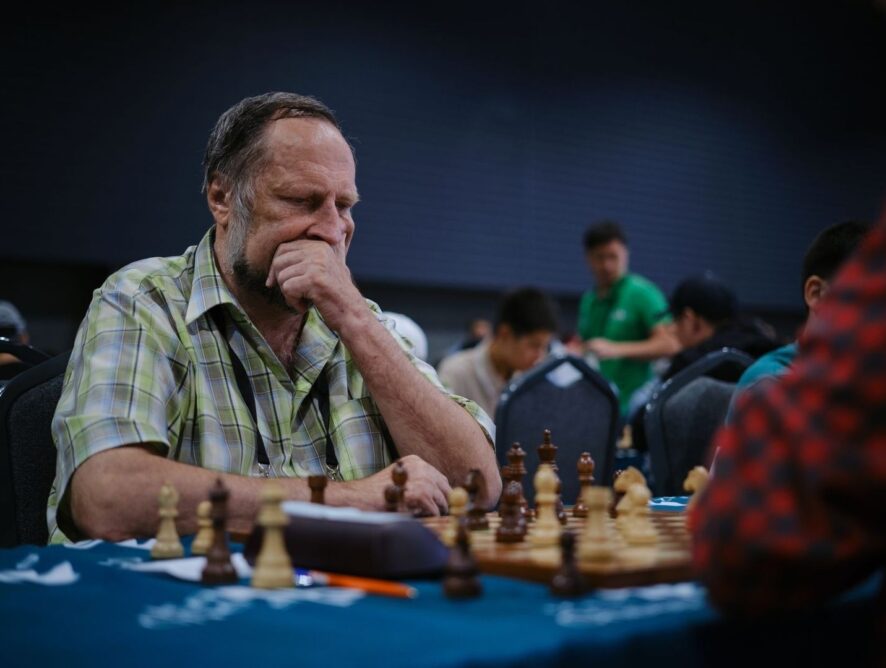
The Immediate Silence Following Resignation
The moment a competitive game ends, the board often becomes unusually quiet. A resignation settles the result, but it does not settle the player”s understanding of what happened. In the minutes that follow, the losing player is psychologically exposed: disappointment narrows attention, embarrassment magnifies the final error, and the mind searches for a simple explanation that will restore control. This is precisely when many players open an analysis board and allow an engine evaluation to define the game. A more durable approach is to begin with a careful chess post-mortem, preserving the human record before consulting objective calculation.
Instant engine use can create analytical amnesia. The evaluation bar announces that a position changed from equal to losing, but it does not preserve why a move looked attractive, which threat was missed, or how the clock and emotional state shaped the decision. Traditional post-mortems addressed this problem naturally. Players remained at the physical board, replayed the game with the opponent, proposed variations, and discovered that both sides had misunderstood important moments. The modern equivalent should begin by archiving subjective memory: plans, doubts, candidate moves, time pressure, and emotional changes. Only afterward should the engine be invited to audit the record.
The Seduction and Peril of Instant Engine Evaluations
Modern chess software is remarkably efficient at identifying tactical errors and comparing candidate moves. Its speed, however, can bypass the mental work that produces improvement. If an engine immediately displays that a move loses two points of evaluation, the player may accept the verdict without reconstructing the position. Active recall disappears. The player no longer has to remember what was considered, calculate the opponent”s strongest reply, or explain the strategic purpose of the chosen move. The result is a correct answer without a reliable method for finding that answer in a future game.
This effect is closely related to anchoring. The first authoritative assessment becomes the reference point for everything that follows. An engine”s preferred move can make a human candidate appear foolish even when that candidate contained an instructive strategic idea. Conversely, a move labeled “best” may be too difficult or unnatural to reproduce under tournament conditions. The most useful question is not simply whether the engine approved a move, but whether the player understood the position well enough to identify its demands.
Chess cognition develops through connected patterns. Prior knowledge gives new information a place in long-term memory, while repeated exposure in varied positions makes that knowledge flexible. A useful discussion of this learning process appears in The Chess Cognition Podcast, which emphasizes mental networks, foundations, and spiral learning. An engine line presented without context often becomes passive information. A self-generated variation, even one that fails, creates a stronger memory because it records a prediction, a test, and a correction.
- Engine-first review identifies what was objectively inaccurate.
- Human-first review identifies what the player believed and why.
- Combined review connects the mistake to a practical training response.
The distinction matters most in unclear middlegames. A player may not lose because of a single tactical oversight, but because of an unexamined assumption about king safety, pawn breaks, or the opponent”s counterplay. Immediate software output can hide that conceptual chain beneath a sequence of precise moves. Human analysis restores the chain before objective verification completes the record.
Reconstructing Psychological Pivot Points at the Board
A game record preserves moves, but not the conditions under which those moves were selected. For serious improvement, the archive should therefore include clock times, confidence levels, emotional spikes, and moments when concentration weakened. Note when a familiar opening ended, when the opponent played an unexpected move, when a plan became unclear, and when the remaining time began influencing calculation. Systematic performance analysis in other sports, including the notation methods discussed in the Handbook of Soccer Match Analysis, demonstrates the value of combining event records with contextual observations. Chess can apply the same principle on a smaller, more personal scale.
Post-game notes should distinguish different kinds of failure. An execution blunder occurs when the correct idea was understood but a move was physically or calculationally mishandled. A conceptual misunderstanding occurs when the chosen plan was based on a false evaluation of the position. A practical error may be objectively acceptable but unsuitable under time pressure. Psychological and time-management errors can overlap with both categories, yet they require different remedies. More tactical exercises will not necessarily fix a player who repeatedly stops checking the opponent”s forcing replies when anxious.
The first meaningful turning point is not always the final blunder. A rook left en prise on move 35 may be the visible cause of defeat, while the deeper issue began several moves earlier, when fatigue and qualification pressure disrupted the normal blunder-checking routine. A useful archive should locate both the immediate error and the condition that made it likely.
| Engine diagnostic | Human archival log |
|---|---|
| Evaluation changed from equal to losing | Confidence fell after an unexpected defensive resource |
| Best move was a tactical continuation | Candidate move was rejected because the opponent”s threat was underestimated |
| Position required accurate calculation | Calculation stopped after a favorable-looking first variation |
| Opening advantage disappeared | Preparation ended and no middlegame plan was identified |
| Blunder occurred in time trouble | Routine checks were abandoned when the clock became critical |
The Four Phase Protocol for Human Centered Post Mortems
A reliable post-mortem benefits from a fixed sequence. The order protects the player from both emotional overreaction and technological overdependence. It also creates comparable records across tournaments, making it possible to identify recurring patterns rather than treating every loss as an isolated event.

- Record the raw experience immediately. Within a few minutes of the handshake, write the moves or positions that felt important, the plans considered, the first moment of uncertainty, and the reason each critical decision seemed reasonable. Include clock times where they are remembered. Avoid engine numbers, opening database references, and polished explanations at this stage. The purpose is preservation, not judgment.
- Review the game with the opponent. Replay critical positions on the physical board or an analysis board without an engine. Ask what each player expected, feared, or intended. Exchange variations, especially around the first serious change in evaluation. The opponent may reveal that a supposed attacking idea was never considered dangerous, or that a quiet move was chosen because of a hidden practical concern. This joint review also helps separate objective errors from mutual uncertainty.
- Conduct a solo investigation. Before computational assistance, return to the critical positions alone. Generate candidate moves, calculate the opponent”s most challenging reply, and test alternate hypotheses. The principle described in Science of Chess is particularly valuable here: try to prove favored ideas wrong rather than searching only for confirming lines. This is the chess equivalent of replacing hope with disciplined minimax thinking.
- Verify with controlled engine use. Turn on the engine only after the human record is complete. Check whether the proposed turning point was genuinely critical, compare practical alternatives, and investigate tactical resources that escaped calculation. Do not copy every principal variation. Instead, ask which finding changes the training plan. The engine should function as an auditor, not as the author of the post-mortem.
This protocol also makes engine disagreements productive. If a player”s analysis finds a sound plan but the engine prefers an obscure tactical move, the lesson may concern calculation depth or practical choice rather than strategic incompetence. If the engine confirms that a move was poor but shows a defense the player never considered, the relevant training task is to improve candidate generation and opponent-threat recognition.
Human review should not be confused with avoiding engines permanently. Computational tools are excellent at exposing tactical refutations, testing endgame claims, and identifying missed defensive resources. Their greatest value appears after the player has committed to a written explanation. At that point, the engine response can be compared with a prediction, and the correction becomes an active learning event rather than passive consumption.
Building a Resilient Archive to Prevent Recurring Mistakes
A painful loss becomes more useful when converted into an organized, retrievable dataset. Store the game with a short summary, the earliest meaningful turning point, the final decisive error, and a classification such as tactical, strategic, conceptual, psychological, or time related. Add one position that should be revisited later and one practical instruction for the next tournament. The aim is not to produce a lengthy diary. It is to create a dependable index of decisions under competitive conditions.
Such an archive is especially valuable during multi-round events. After a difficult game, emotional fatigue can distort the next round before it begins. The player may replay the previous blunder, rush to recover rating points, or become excessively cautious. A brief reset routine can protect the intervening period: record the essential facts, identify one lesson, eat and hydrate, move away from the board, and return to the next game with no demand to compensate for the previous result. A dramatic failure described in Chess isn”t for the Weak illustrates how a pressure-induced lapse can be misunderstood as a permanent lack of ability. Proper diagnosis preserves perspective.
- Tag every critical position by error type and game phase.
- Keep separate files for opening exits, calculation failures, endgames, time trouble, and emotional disruptions.
- Review recurring tags monthly rather than rereading every game at random.
- Convert each repeated pattern into a specific habit, such as checking forcing moves before committing.
- Revisit successful games as well as losses to identify decisions that deserve reinforcement.
A practical calculation database can contain a diagram, the position before the mistake, the player”s original thought, two or three candidate moves, the opponent”s strongest reply, and the verified explanation. Re-solving these positions later without notes tests whether the lesson has become usable knowledge. Advice on deliberate pauses, including the familiar “hand-sit” technique, is valuable because it converts an abstract lesson about blunders into a repeatable tournament behavior. When a pattern remains unclear after independent work, review by a coach or stronger human player can expose exhaustion, perfectionism, and practical misjudgment that an engine cannot fully diagnose.
Transform Your Defeats into Enduring Understanding
The central change is methodological. A loss should not begin with passive consumption of an evaluation bar. It should begin with a preserved account of human thought, followed by opponent discussion, independent calculation, and controlled verification. This sequence keeps the psychological reasons behind mistakes visible while still taking advantage of modern analytical precision. The objective is not to defend every move made at the board, but to understand the decision process that produced it.
For the next classical tournament game, make one concrete commitment: immediately after the handshake, write down three moments that mattered, the plan being pursued, the first point of uncertainty, and the condition of the clock. Review the game without an engine before the day ends, then use software to test the conclusions. Over time, this archive will show whether the recurring problem is calculation, threat recognition, strategic planning, time management, or emotional control. Defeats then cease to be merely recorded results. They become carefully dated evidence of how understanding is developing.
